

Voice AI is no longer an experimental interface limited to smart speakers and basic commands. As we move into 2026, conversational and voice-based artificial intelligence is becoming a core business technology, reshaping how teams work, how systems are controlled, and how humans interact with software.
Businesses are asking important questions: Will voice replace traditional interfaces? How reliable is conversational AI for enterprise use? What trends should we prepare for now to stay competitive?
This blog answers those questions by breaking down the most important voice AI trends for 2026, why they matter, and how organizations can prepare strategically.
Why Voice AI Is Accelerating So Fast
The rapid advancement of large language models, speech recognition accuracy, and edge computing has pushed voice AI beyond novelty. In 2026, voice interfaces are expected to become context-aware, emotionally intelligent, and deeply embedded into business workflows.
Several forces are driving this shift:
- Employees want faster, hands-free ways to work
- Enterprises need more intuitive human–machine interaction
- AI systems are now capable of understanding intent, not just commands
Voice is becoming the most natural interface for complex systems, and businesses that adapt early will gain a productivity and accessibility advantage.
1. Voice AI Moves From Assistance to Execution
One of the biggest voice AI trends in 2026 is the shift from a helpful assistant to an action-oriented executor.
Earlier voice tools mainly answered questions or triggered simple actions. Next-generation voice AI can now:
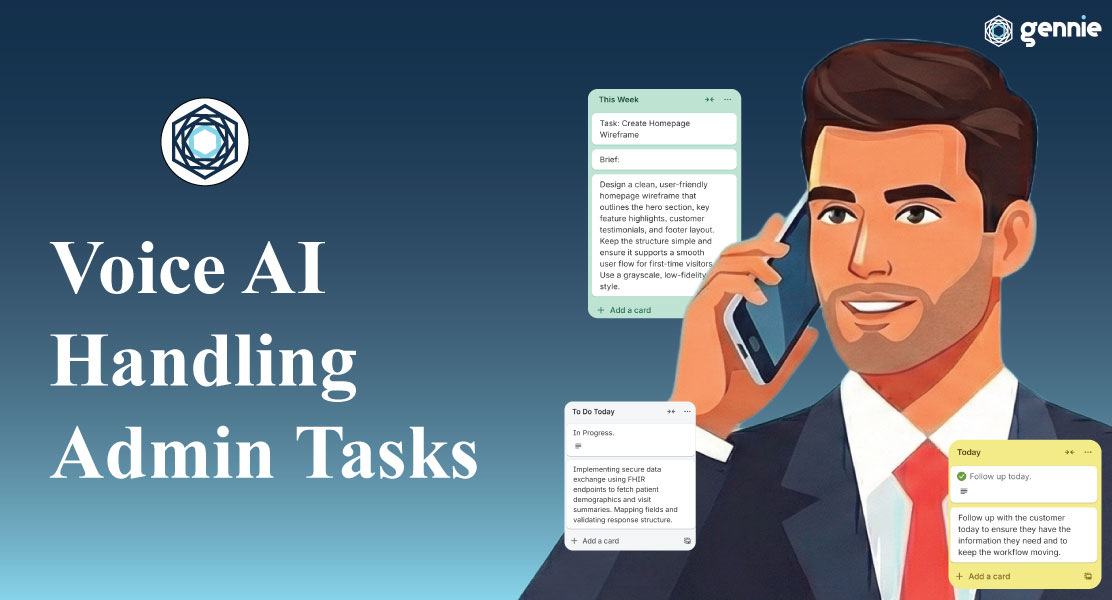
- Create, update, and manage tasks
- Modify records across enterprise software
- Trigger multi-step workflows using a single voice command
Instead of saying “Here’s how to do it,” voice AI increasingly says, “It’s done.”
This trend matters because it directly reduces time spent navigating interfaces, switching tabs, or typing repetitive inputs.
2. Conversational AI Becomes Context-Aware
In 2026, conversational AI is no longer operating in isolation. Voice assistants now understand:
- Ongoing conversations
- User role and permissions
- Project context and deadlines
- Previous actions taken during a session
This allows voice AI to hold real conversations rather than execute isolated commands.
For example, instead of repeating instructions, users can say:
“Update the same task we discussed earlier and notify the team.”
This contextual memory is critical for enterprise adoption, where conversations and workflows are continuous rather than one-off.
3. Emotion Detection and Adaptive Responses
Emotion-aware voice AI is emerging as a defining trend for 2026.
Advanced systems can now analyze:
- Tone of voice
- Speaking speed
- Stress or hesitation patterns
While this does not mean AI “feels emotions,” it can adapt its responses. In customer support, this means calmer replies during frustration. In internal tools, it means clearer confirmations during high-pressure situations.
For businesses, emotion detection improves:
- User experience
- Trust in AI systems
- Adoption rates across non-technical teams
4. Voice-First Workflows Replace Click-Heavy Processes
One of the most practical trends in voice AI is the rise of voice-first workflows.
Instead of voice being an add-on to existing software, tools are now being designed where voice is the primary interface. This is especially impactful in:
- Project management
- CRM updates
- Task tracking
- Status reporting
This shift reduces friction for:
- Remote teams
- Mobile professionals
- Users with accessibility needs
Voice-first workflows are faster, more inclusive, and better aligned with how humans naturally communicate.
5. Offline and Edge-Based Voice AI Adoption
A major limitation of early voice assistants was their constant reliance on the internet. In 2026, this is changing rapidly.
Thanks to edge computing and lightweight AI models, voice AI can now:
- Function offline or with limited connectivity
- Process commands locally for higher privacy
- Deliver faster response times
This trend is critical for enterprises dealing with sensitive data or operating in low-connectivity environments.
It also opens the door to voice AI in industries such as healthcare, field services, and logistics, where uninterrupted access is critical.
6. Deep Integration With Enterprise Software Ecosystems
Voice AI in 2026 is not standalone; it is deeply integrated.
Modern voice assistants connect seamlessly with:
- Project management tools
- CRMs
- Collaboration platforms
- Internal databases
This integration allows voice commands to operate across systems, not just within one app.
For example, a single command can:
- Update a task
- Log activity in a CRM
- Notify stakeholders on a messaging platform
This level of integration transforms voice AI into a central control layer for enterprise workflows.
7. Hyper-Personalization Through Voice Profiles
Another major trend is hyper-personalized voice AI experiences.
Voice assistants in 2026 can tailor responses based on:
- Individual work style
- Preferred tools
- Frequently used commands
- Industry-specific language
This personalization reduces training time and makes AI feel less generic and more like a dedicated assistant.
For businesses, it means higher adoption and less resistance from teams who value efficiency over experimentation.
8. Voice AI as a Productivity Multiplier, Not a Feature
Perhaps the most important shift is how businesses view voice AI.
In 2026, voice AI is no longer marketed as a “cool feature.” It is positioned as a productivity multiplier measured in:
- Time saved per task
- Reduced cognitive load
- Faster execution of routine work
Organizations evaluating voice AI now ask:
- How many actions can it replace?
- How much time does it save weekly?
- Does it integrate with existing workflows?
This outcome-driven mindset is shaping how voice AI tools are built and adopted.
How This Aligns With Real-World Tools Like Gennie
These trends are not theoretical. Tools like Gennie already reflect many of these 2026 directions for voice AI.
Gennie is a voice-powered AI assistant designed for work, enabling users to manage tasks and workflows across tools using natural voice commands. It demonstrates:
- Voice-first task execution
- Deep integration with productivity platforms
- Reduced reliance on screens and typing
Rather than focusing on casual conversation, Gennie aligns with the enterprise shift toward actionable, workflow-driven voice AI, a defining theme for 2026.
Key Questions Businesses Should Ask Before Adopting Voice AI
To prepare effectively, organizations should evaluate voice AI through the lens of real needs:
- Can this voice AI execute tasks, not just answer questions?
- Does it integrate with our existing software stack?
- How does it handle context and follow-up commands?
- Is it secure, private, and reliable at scale?
- Will it reduce time spent on repetitive actions?
Voice AI that cannot answer these questions clearly will struggle to deliver long-term value.
Final Thoughts: Preparing for Voice AI in 2026
Voice AI in 2026 is about control, speed, and natural interaction. Businesses that prepare now by understanding trends, evaluating real use cases, and focusing on workflow impact will be best positioned to benefit.
The future of work is not just automated.It is conversational, voice-driven, and deeply human in how it feels to use.